Wednesday WHERE Can Biophilia Happen?
Where Does Biophilia Actually Happen?
When families think about nature connection, they often picture something dramatic. Forest schools. Coastal walks. Countryside escapes.
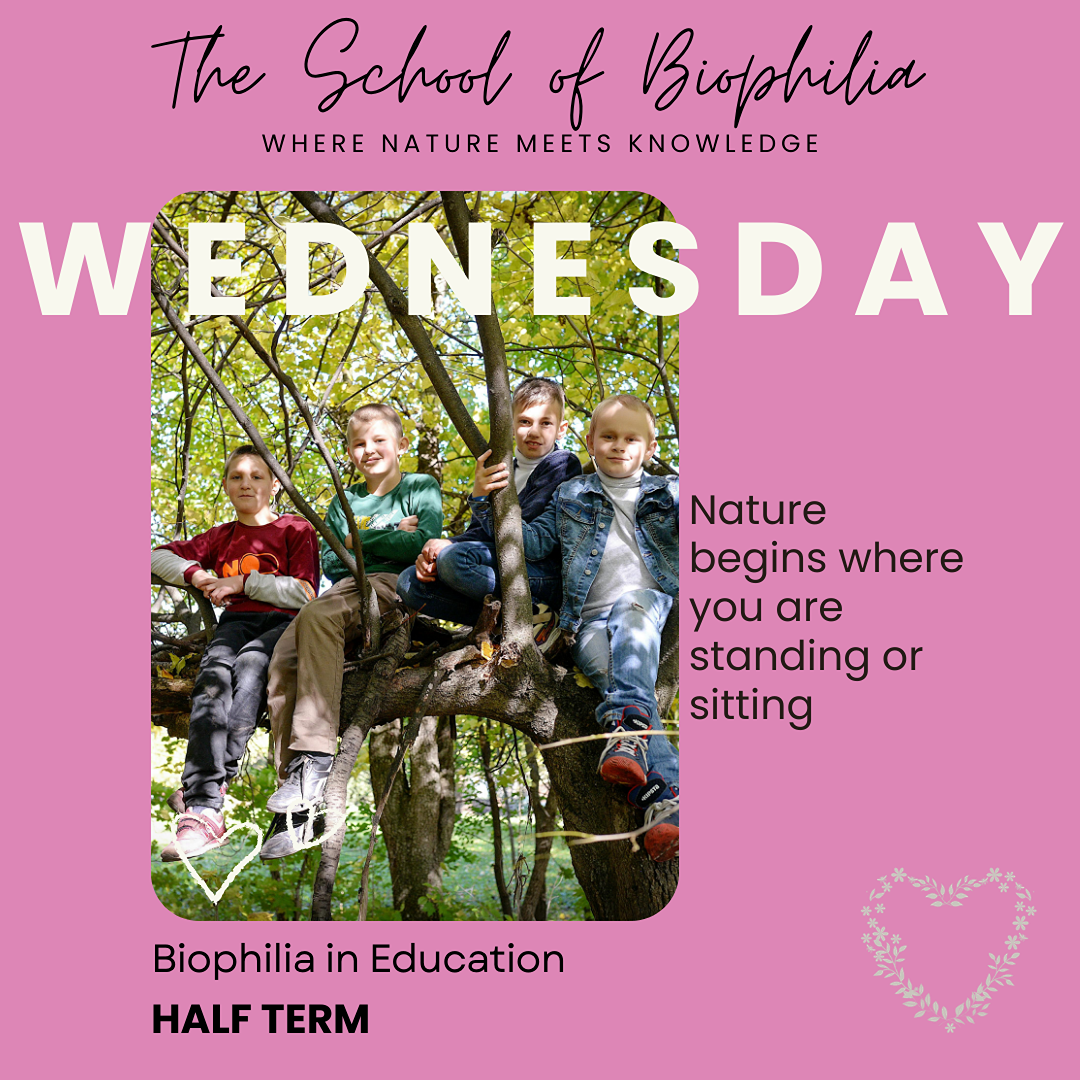
But biophilia does not depend on distance travelled. It depends on relationship built.
This half term, the question is not how far you can go. It is how deeply you can notice where you already are.
So where does biophilia actually happen?
1. It Lives in Everyday Green Spaces
Local parks, community gardens, canal paths, school fields. These spaces may feel ordinary, but they are active ecosystems.
Children do not need wilderness to benefit from nature. They need repeated contact. Familiar places allow them to observe seasonal change, track growth, notice weather shifts and develop attachment.
The same tree visited weekly becomes a calendar. The same grassy slope becomes a place of memory.
Regularity builds relationship.
2. It Lives at Home
Biophilia is not confined to outdoor spaces. Our interiors shape wellbeing too.
Natural light, open windows, houseplants, wooden surfaces and natural textures all influence how children feel and focus. A room with daylight and airflow feels different to one that is enclosed and artificial.
Even small shifts matter. A bowl of seasonal fruit. A branch collected on a walk. Growing herbs on a windowsill. These are not decorative gestures alone. They are sensory bridges between inside and outside.
Home can either dull connection or strengthen it.
3. It Lives in Routine
Perhaps most importantly, biophilia lives in rhythm.
Walking the same route and noticing change. Checking on a plant each morning. Sitting on the same bench and observing light shift across the afternoon.
Routine creates intimacy with place. Intimacy creates meaning. Meaning builds care.
Location, home environment and routine are not separate ideas. Together they create a web of connection around a child’s daily life.
Conclusion
You do not need to travel far this half term.
Biophilia begins exactly where you are standing.
If you would like practical ways to create biophilic moments at home and in your neighbourhood, read the full series on Substack and explore our family activity guides in the School of Biophilia shop.
#HalfTermWithNature #SchoolOfBiophilia #BiophilicFamilies #NatureConnectedKids #RegenerativeParenting
Click on this text to start editing and enter your own text with some basic formatting. Just click anywhere outside the text box when you're done to continue working on the rest of your page. Elements like this text can often be hidden in the block settings.
Comments