Tuesday Why Biophilia Matters More Than We Realise
Why does nature connection matter so much in primary school years? Today we explore how biophilia supports regulation, curiosity and long-term care for the world around us.
Half term often arrives with good intentions. We want rest. We want fun. We want meaningful time together.
But beneath all of that sits something more fundamental: our children’s nervous systems are tired.
School life is stimulating. Social navigation is complex. Screens are constant. Biophilia matters because it works quietly underneath all of this. It does not compete for attention. It restores it.
So why should parents engage with biophilia during primary school years?
1. Because Regulation Comes Before Learning
Before a child can concentrate, they must feel safe in their body. Before they can absorb information, their stress levels must settle.
Natural environments reduce stress responses and support emotional balance. Green space exposure has been linked to improved focus and reduced behavioural difficulties. When children climb, dig, balance, or simply sit outdoors, their nervous systems recalibrate.
Half term is an opportunity to reset overstimulated systems. Slower mornings outside. Time without performance pressure. Sensory contact with air, soil, light and movement.
Calmer bodies create better learning conditions.
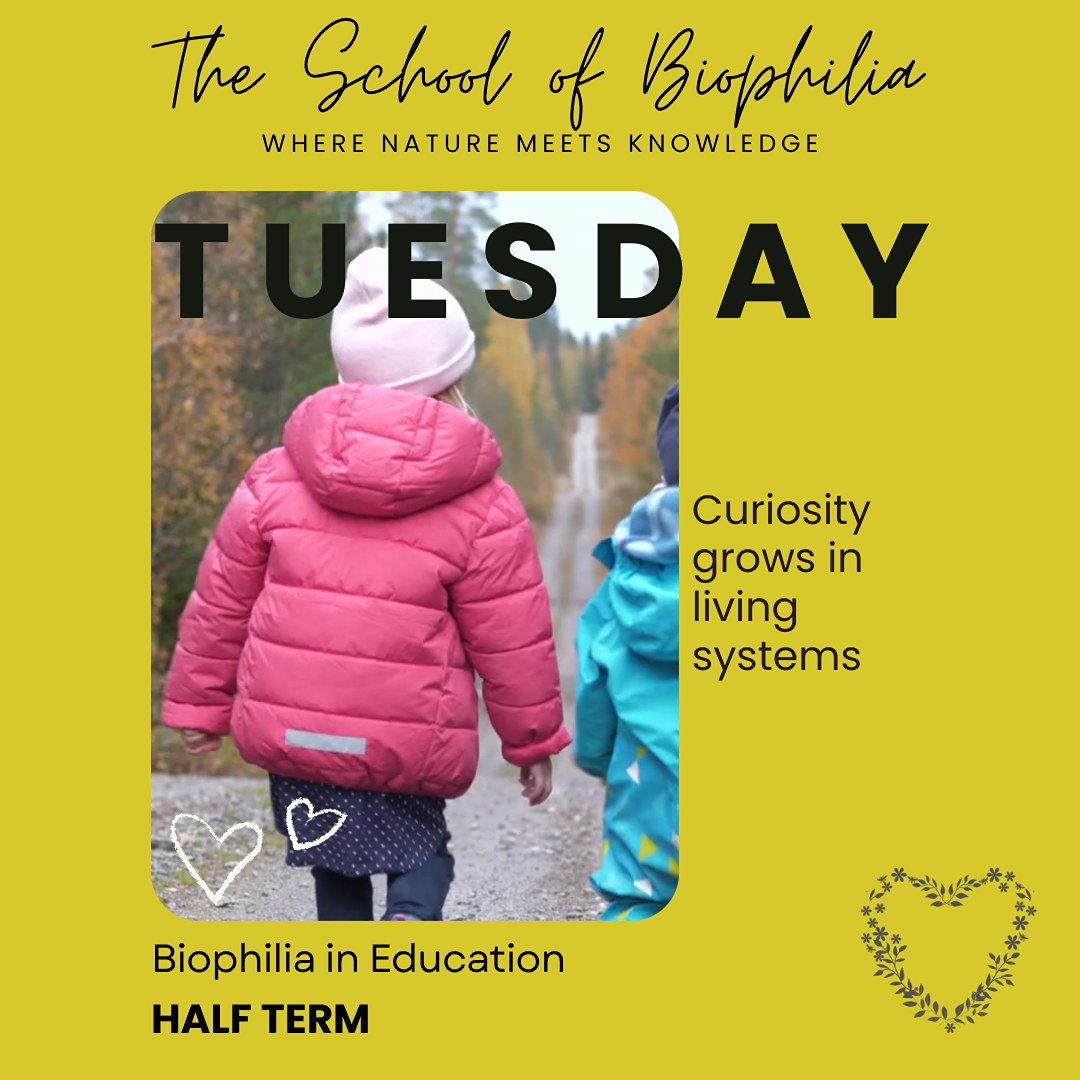
2. Because Curiosity Thrives in Living Systems
Nature is dynamic. It changes with weather, season, time of day. It does not deliver instant answers.
When a child watches ants carrying food, notices frost patterns, or compares leaves by shape and texture, they are practising science. They are building observation skills, pattern recognition, patience and inquiry.
Biophilia strengthens curiosity without worksheets. It nurtures thinking that is exploratory rather than reactive.
Curiosity developed in the park spills into the classroom.
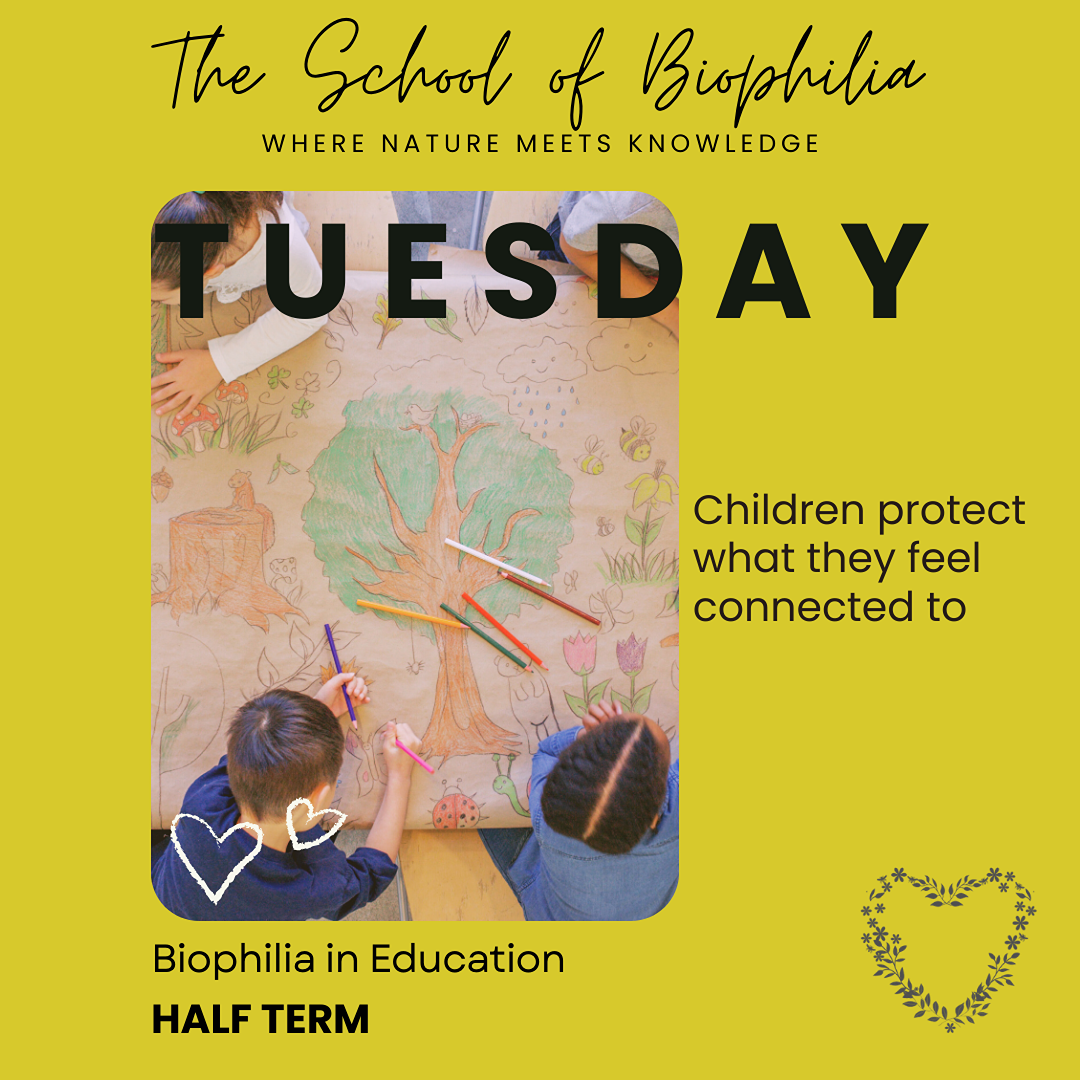
3. Because Environmental Empathy Begins Early
Children protect what they feel connected to.
If we want future generations to care about climate, biodiversity and community wellbeing, connection must come before instruction. Facts alone rarely inspire care. Experience does.
Regular, positive contact with nature builds emotional attachment. That attachment becomes stewardship over time.
Regulation, curiosity and empathy are not separate outcomes. They interconnect and reinforce one another.
Conclusion
Biophilia is not decorative. It is developmental.
It supports emotional wellbeing.
It strengthens attention.
It builds long-term environmental care.
Half term offers space to lean into these foundations gently.
If you would like practical, primary-friendly ways to bring biophilia into your family life this week, read the full series on Substack and explore our downloadable activity guides in the School of Biophilia shop.
#HalfTermWithNature #SchoolOfBiophilia #BiophilicFamilies #NatureConnectedKids #RegenerativeParenting
Click on this text to start editing and enter your own text with some basic formatting. Just click anywhere outside the text box when you're done to continue working on the rest of your page. Elements like this text can often be hidden in the block settings.
Comments